
Meditation and Meaning in the Catholic Faith
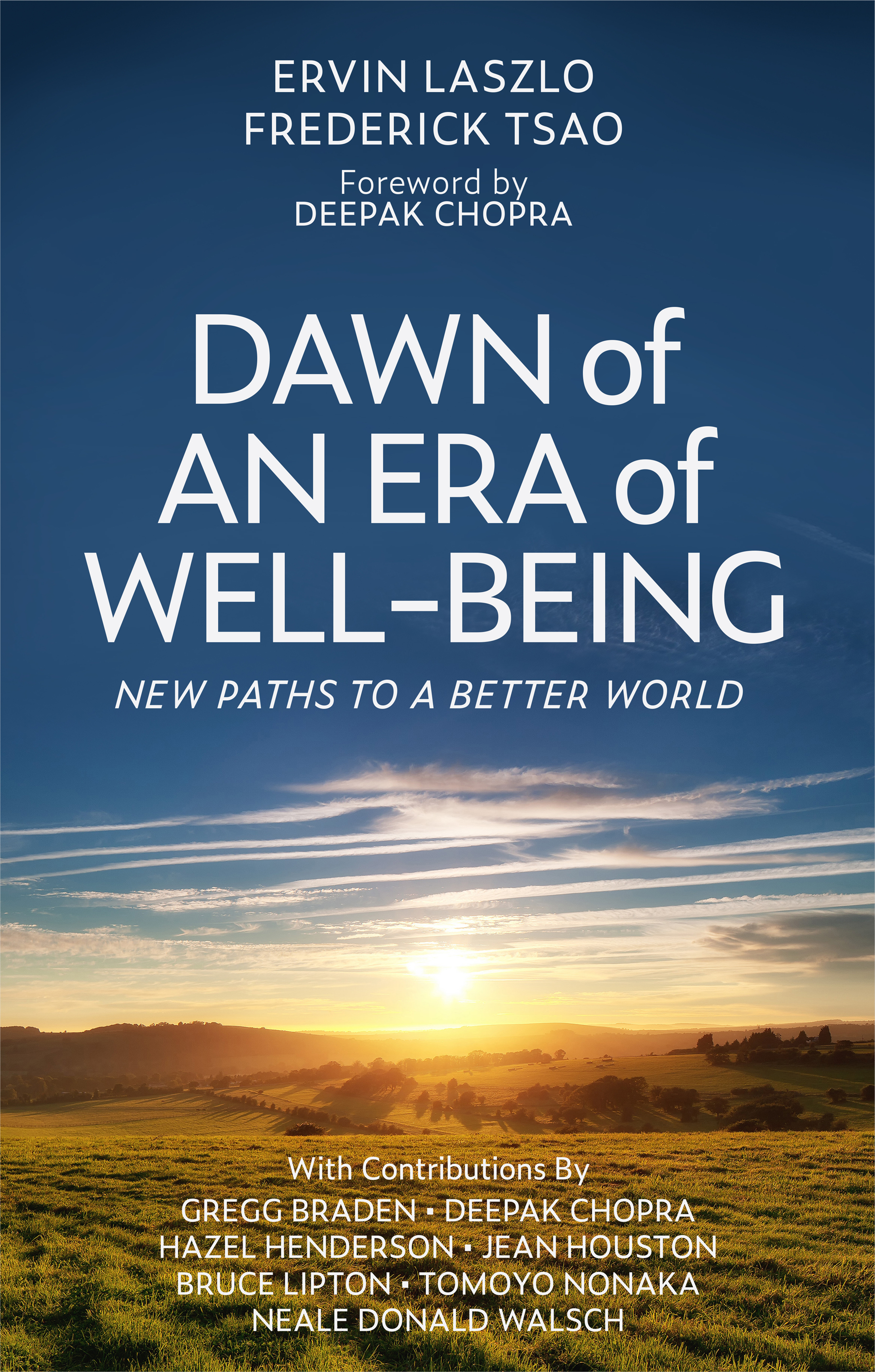
Dawn of an Era of Well-Being, the BOOK is available wherever books or ebooks are sold

Father Laurence Freeman
“Dawn of an Era of Well-Being” Podcast Talks to Benedictine Monk and Christian Scholar, Father Laurence Freeman
The word ‘religion’ means 'binding'—to remember the links of unity that we have not only with each other as a human family...but also with the world of nature, and the cosmos, and with God.”
NEW YORK, NY, UNITED STATES, August 29, 2023/EINPresswire.com/ -- Now its third season, Dawn of an Era of Well-Being: The Podcast brings together the world’s most innovative thinkers to weigh in on matters concerning the future of ourselves and our planet—and to discuss that future not as something to be predicted, but to be created. As a special focus, this third season is dedicated to dialogues on religious worldviews. In order to realize this project, the producers have invited representatives from various faith and belief systems to share their individual perspectives and practices; with a particular emphasis on ushering in a new era of well-being. Included with this new season of programs is a truly extraordinary conversation on the Catholic faith with the Benedictine monk and Catholic Priest, Father Laurence Freeman.— Father Laurence Freeman
With Irish and English roots, Laurence Freeman was educated by the Benedictines and studied English Literature at New College, Oxford University. Before entering monastic life, he worked with the United Nations in New York, in Banking and Journalism. He is Director of The World Community for Christian Meditation (WCCM) a global, inclusive contemplative community. Fr. Laurence Freeman is a monk of the Benedictine Congregation of Monte Oliveto Maggiore.
During this conversation, Father Laurence and podcast hosts Ervin Laszlo and Frederick Chavalit Tsao, and moderator Nora Csiszar, delved into a variety of topics concerning the Catholic faith and the modern world; in particular vis-à-vis the sciences and relationships with other faith traditions—all of this with the ultimate goal of building a better world through collaboration rather than competition.
Of particular interest is Father Laurence’s deep practices in meditation and knowledge on Christian mysticism. He speaks of the need to understand religion, which can be conceived as having three aspects, those being: the institutional, or structural and organizational aspects; the intellectual, which acknowledges that there is an experience at the heart of religion and that human mind has an instinctive impulse to understand; the third element is the mystical which he feels is of great importance because without it religion will degenerate and stagnate, and potentially become oppressive. As he states during this discussion:
“And these three elements have to be nurtured, and the one that most often gets marginalized is the mystical. And when that happens…religion fails. It fails what it is destined to contribute to humanity, and that is a sense of really linking—the word ‘religion’ of course means religare (Latin, “binding”)—to remember the links, the bonds, of unity that we have not only with each other as a human family, across all our differences, but also with the world of nature, and the cosmos, and with God.”
So it is based upon meditation and mysticism that Father Laurence posits both his efforts at interfaith dialogue, and a reconciliation of science and faith. Regarding science and faith, he paraphrases the Catholic priest and theoretical physicist, Georges Lemaitre who spoke of religion and science being highly complementary means of investigating the truth. Lemaitre pointed out that science is a contemplative activity, similar to religious meditation in that it demonstrates a great deal of humility in that the more it knows, the more it realizes how much it does not know; it is driven the experience of discovery, a childlike impulse for exploration; and finally it has sense of service at its core, for all of humanity.
A lasting testament to Father Laurence’s dedication to interfaith dialogue is his collaboration with the Dalai Lama, which includes the 1996 publication A Good Heart which describes with incredible insight was a Buddhist perspective on the teachings of Jesus.
The Dawn of an Era of Well-Being podcast is co-production of the Laszlo Institute of New Paradigm Research (LINPR), The OCTAVE Institute Quantum Leadership Center, and SelectBooks publishers. The podcast is distributed to most podcast distribution services including Apple and Spotify and the archived episodes are easily accessed with a free subscription. The book Dawn of an Era of Well-Being, by Ervin Laszlo and Frederick is also available wherever books or ebooks are sold.
Frederick Chavalit Tsao is the Chairman of IMC Pan Asia Alliance Group and founder of the OCTAVE Institute. He is a fourth-generation business steward, who joined his family business at age 20 and assumed chairmanship at age 37. Under his stewardship, IMC evolved from a traditional shipping business to one that has a global presence and businesses in integrated supply chains, lifestyle, investments and community development. His organization, the OCTAVE Institute is a quantum leadership cultivation platform and a partner on a transformative journey, so people find clarity, harmony, and a new level of consciousness and freedom.
Tsao’s newest book One Choice, One World (SelectBooks, Inc., ISBN: 978-1-59079-554-5) is an economics focused work arguing for a shift in global consciousness from a worldview centered on profit and the individual accumulation of wealth and possessions to one that fosters connection, common purpose, and collective well-being. “We have an ethical challenge before us,” Tsao says. “Business needs to reinvent its ethical role in this new social economic system. The sustainability crisis today is created primarily by businesses; therefore, they need to lead the world out of this crisis.”
Philosopher and systems scientist, Ervin Laszlo, is the author, co-author or editor of 106 different books that have appeared in a total of 25 languages, he has written over 400 articles and research papers. The subject of the one-hour PBS special Life of a Modern-Day Genius, Laszlo is the founder and president of the international think tank The Club of Budapest and of the prestigious The Laszlo Institute of New Paradigm Research. The recipient of various honors and awards, including Honorary Ph.Ds. from the United States, Canada, Finland, and Hungary, Laszlo received the Goi Award, the Japan Peace Prize in 2001, the Assisi Mandir of Peace Prize in 2006, and was nominated for the Nobel Peace Prize in 2004 and 2005.
Kenichi Sugihara
SelectBooks, Inc.
kenichi@selectbooks.com
Visit us on social media:
Facebook
YouTube
Legal Disclaimer:
EIN Presswire provides this news content "as is" without warranty of any kind. We do not accept any responsibility or liability for the accuracy, content, images, videos, licenses, completeness, legality, or reliability of the information contained in this article. If you have any complaints or copyright issues related to this article, kindly contact the author above.
